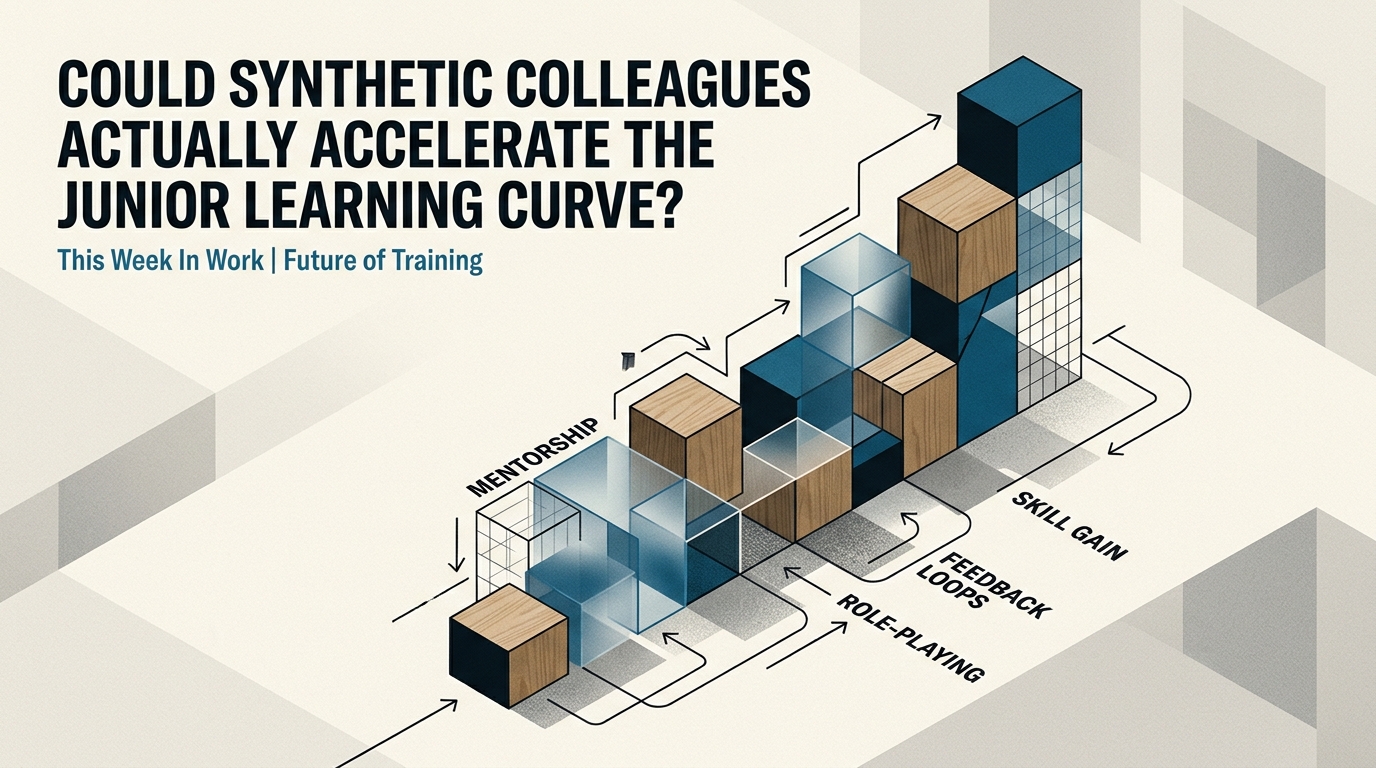
Could synthetic colleagues actually accelerate the junior learning curve?
Junior careers long relied on tedious administrative legwork to teach business nuance. Reimagining early roles around orchestration may create the most capable cohort of professionals yet.
A persistent worry shadowing modern corporate training has been the fate of the junior associate. If synthetic tools draft the introductory briefs, balance the trial ledgers, and compile the competitive dossiers, how do newcomers acquire the battle scars required to cultivate genuine expertise? The emerging answer is both unexpected and remarkably cheering.
Turning the entry gate into an accelerator
Rather than hollowing out early careers, the automation of grunt work is turning entry-level posts into intensive apprenticeships in judgment. Analysis published by Deloitte Insights highlights that multi-agent systems can serve as powerful upskilling engines, allowing junior personnel to coordinate end-to-end projects far earlier than previous generations could dream of.
Freed from formatting slide decks and copy-pasting spreadsheet rows, new entrants spend their energy validating outputs, reconciling edge cases, and steering autonomous helpers. They are learning to think like project directors in their first year on the job.
New titles and cross-generational alliances
This structural evolution is spawning a rich crop of hybrid vocations. In its enterprise overview, Deloitte identifies fast-growing demand for AI operations managers, quality stewards, and human-AI interaction specialists. These positions require acute critical thinking, domain discernment, and clear communication—traits that flourish when mechanical tasks are removed from the working day.
Moreover, the dynamic is reshaping team culture. White paper findings from IWG reveal that younger, tech-fluent recruits are actively guiding senior colleagues through new digital interfaces, establishing collaborative skills-sharing loops across age brackets.
The most resilient workplaces do not hoard knowledge in executive siloes; they treat every team member as an active system architect.
When routine drudgery disappears from early career pathways, professional maturity arrives years ahead of schedule.
What daring responsibilities could you safely delegate to junior staff if automated systems handled their background execution?