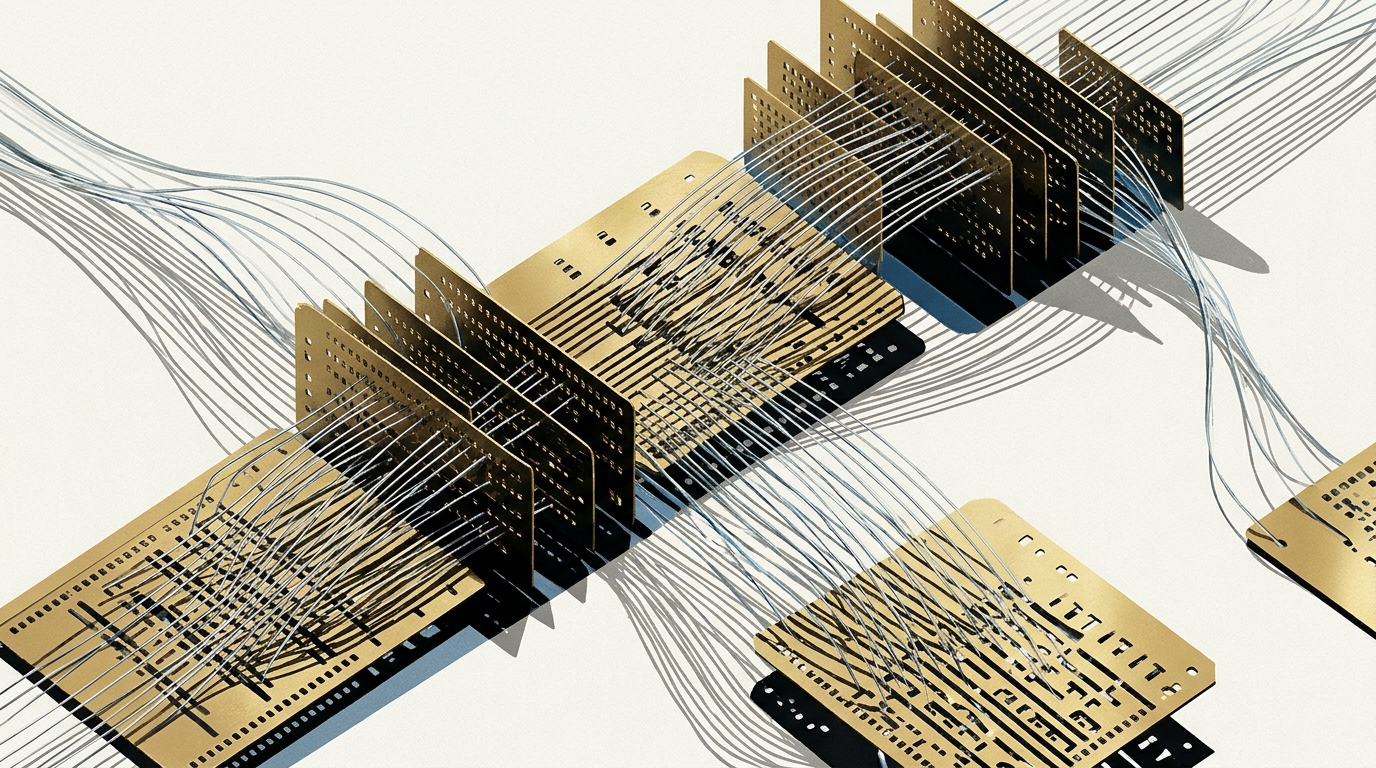
Did the 1890 Hollerith tabulator establish the blueprint for agentic delegation?
When Herman Hollerith automated census data, sceptics feared an administrative wipeout. Instead, it birthed modern information management and expanded institutional ambition.
In the late nineteenth century, the United States Census Bureau faced an existential administrative crisis. The country had grown so rapidly that tabulating the 1880 census had taken almost an entire decade; tallying the 1890 count threatened to outlast the century itself. Enter Herman Hollerith, who invented an electromechanical tabulating machine that encoded demographic details onto punched cards.
The administrative expansion
Contemporary observers feared that mechanised tabulation would eliminate legions of clerical workers. Yet the result proved quite the reverse. Hollerith's tabulator processed the aggregate population count in mere months, but instead of curtailing administrative staff, the technology ignited an insatiable appetite for complex statistical analysis. The Bureau retained its personnel to run deeper cross-tabulations that had previously been unthinkable, and Hollerith's enterprise eventually laid the groundwork for IBM.
Delegating mechanical recording did not shrink the enterprise; it expanded administrative horizons. We are witnessing an identical pattern today as autonomous agents absorb multi-step execution. At Japanese insurer SOMPO, teams have deployed more than 10,000 custom AI agents across 34,000 employees for document search and synthesis, as reported by Google Cloud.
Similarly, squads of digital agents are now reverse-engineering and modernising legacy systems while humans steer and validate the outcomes, according to McKinsey.
Just as punch cards liberated clerks from tally marks to pursue demographic science, autonomous software relieves modern professionals from routine synthesis to tackle institutional strategy.
The lesson from 1890 is reassuringly durable. When machines take over the friction of data handling, human ambition simply expands to fill the newly cleared mental space.
If routine synthesis is no longer your bottleneck, what larger questions should your organisation dare to ask?