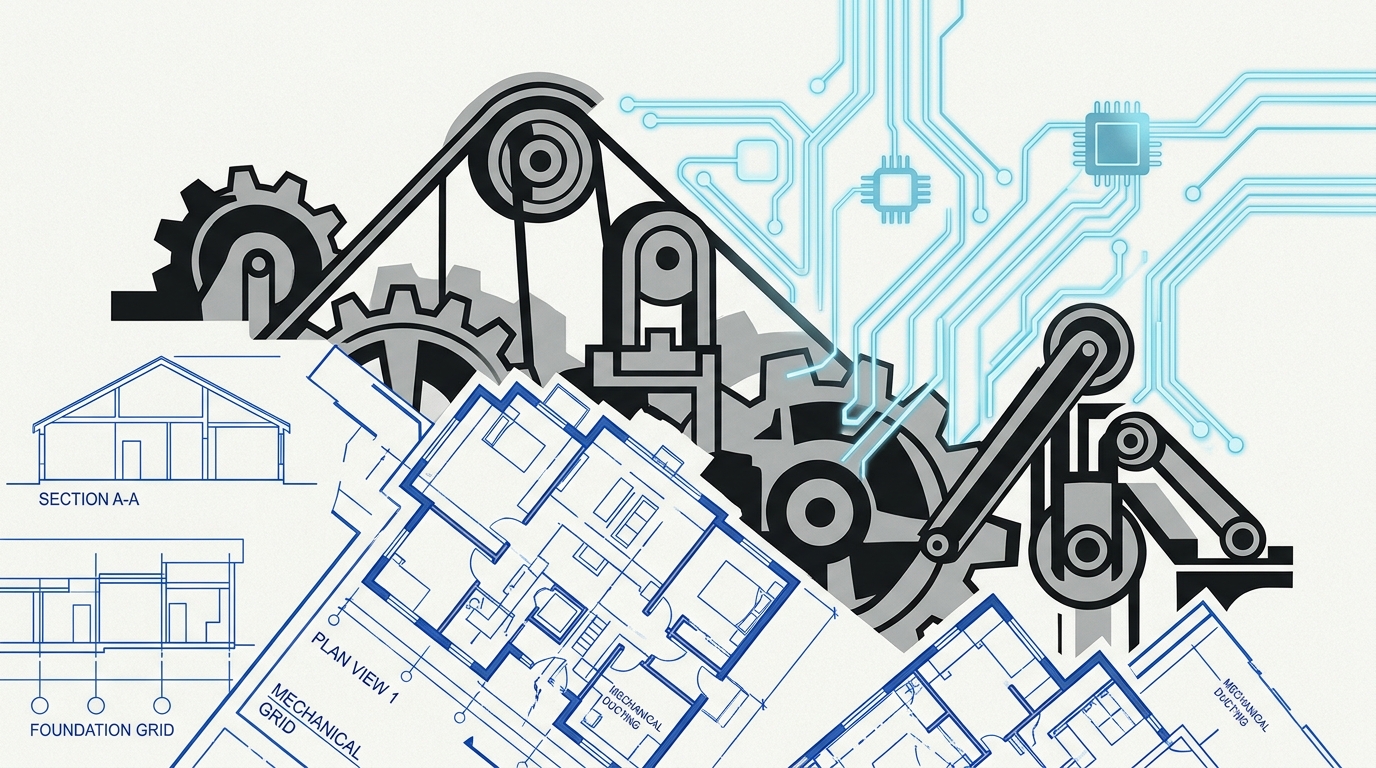
Why does every technological leap wait for the floorplan to change?
Groundbreaking technology rarely pays off while squeezed into pre-existing workflows. True productivity surges only after organisations redesign how work actually moves.
When electric dynamos first arrived in nineteenth-century British factories, industrialists anticipated instant efficiency gains. Instead, decades passed with virtually stagnant productivity. Factory owners had merely swapped their massive central steam engines for electric motors, leaving the complex web of overhead belts, pulleys, and vertical factory floors intact. It was only when plants were rebuilt as single-storey, horizontal layouts—enabling flexible assembly lines—that the true economic dividend materialised.
The modern diffusion puzzle
Today, corporate enterprises find themselves at a remarkably familiar impasse. As economist Erik Brynjolfsson observes for the World Economic Forum, the defining bottleneck of the digital era is rarely technological invention; it is diffusion. Installing new software without restructuring operational habits simply automates legacy friction.
This organisational lag explains why Gartner observes that only one in fifty enterprise initiatives currently yields transformative value, even as leadership teams announce ambitious productivity targets. The fault lies not in the algorithms, but in the corporate machinery surrounding them. A separate study by Gartner revealed that 78% of human resources leaders recognise internal workflows and roles must fundamentally change to extract genuine utility from modern tools.
Rebuilding the assembly line
Buying capability is effortless; dismantling siloed approval chains, outdated reporting hierarchies, and habituated communication loops is arduous work. The historical lesson of industrial electrification is that tools cannot shine inside architectures designed for a prior era.
Until businesses restructure their communication flows, project handoffs, and team autonomy to match the velocity of contemporary computation, they are merely bolting clean electric motors onto rattling steam shafts.
Are you redesigning the assembly line, or merely replacing the engine in an obsolete plant?